4.8 / 5
Customer
Satisfaction







Grooved pipe fittings are a trusted connection solution for building fast, reliable, and code-compliant water-based fire protection systems. Designed to join steel grooved pipe using a gasket-sealed pipe joint, these fittings provide a secure alternative to threaded or flanged connections while reducing installation time and labor costs.
At QRFS, we offer a complete selection of UL Listed and FM Approved grooved pipe fittings manufactured from durable ductile iron and engineered for long-term performance in wet and dry fire protection applications.
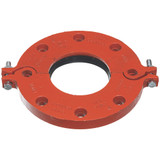
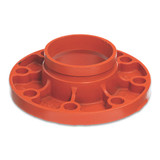
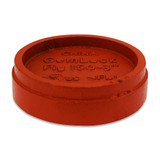
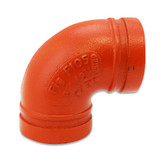
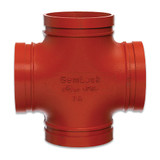
Grooved fittings and couplings are ideal for projects where speed, flexibility, and servicing efficiency are a priority. Our fittings include elbows, tees, reducers, caps, adapters, and grooved flanges designed for pipes with grooved end connections. Options include concentric and grooved eccentric reducers, grooved drain cap fittings, and grooved X grooved configurations to match system layout requirements. Each fitting is built for tight tolerances, ensuring proper gasket compression and leak-free pipe joints.
Grooved pipe fittings are commonly used in fire sprinkler system installations where efficiency and reliability are critical. The steel grooved pipe is joined using bolts and nuts that secure the coupling housing around a gasket, forming a strong yet adaptable pipe joint. This design supports thermal movement and minor misalignment without stressing the piping system. Grooved fittings can also provide flexibility for installations and system maintenance in tight spaces.
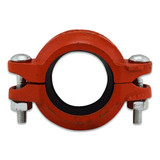
Grooved couplings are essential components of grooved pipe systems. We carry rigid grooved couplings for applications requiring minimal movement, as well as flexible coupling options that absorb vibration and allow controlled deflection in systems requiring seismic design.
Grooved pipe couplings are ideal joining methods for system installations, retrofits, and expansion projects. To learn more about when to choose rigid vs. flexible couplings, read this blog.
A properly designed piping system using grooved fittings and couplings can improve task efficiency, from installation to inspection, testing, and maintenance. Grooved pipe joints simplify future servicing by allowing many system sections to be removed without cutting or rethreading pipe. Grooved systems are widely accepted by authorities having jurisdiction and align with standards from the National Fire Protection Association, UL, FM, the American National Standards Institute (ANSI), and more.
Shop confidently at QRFS for quality grooved pipe fittings built to perform when it matters most. If you need other parts, check out our selection of:
You can also return to the QRFS home page to view our complete line of fire protection parts.
What makes grooved couplings faster to install than threaded or welded joints?
Grooved couplings use a simple gasket-and-housing design that clamps over grooved pipe ends, eliminating the need for onsite welding or threading. This streamlined method significantly reduces labor time and simplifies installation.
How do grooved couplings create a leak-resistant pipe connection?
When installed, the gasket compresses between pipe grooves while the coupling housing clamps around it, forming a secure seal that prevents leaks. This mechanical connection is reliable without the need for heat or specialized tools.
What is the difference between rigid and flexible grooved couplings?
Rigid couplings form a stable joint that allows minimal movement, making them ideal for standard pipe runs. Flexible couplings permit controlled movement and deflection, which is useful for seismic protection and handling other vibrations. Flexible couplings are recommended in systems where seismic activity or other movement and vibration could stress the piping network. They provide built-in flexibility while maintaining a water-tight connection.
What is a reducing coupling in a grooved pipe system?
A reducing coupling joins two pipes of different diameters using a single grooved coupling housing. It occupies less space than using separate reducers and couplings, though installers should ensure proper alignment when reducing sizes.
How does a concentric reducer differ from an eccentric reducer?
A concentric reducer transitions between pipe sizes while keeping the center axis aligned, making it suitable for vertical flow applications. An eccentric reducer offsets the centerline to maintain consistent top or bottom elevation and help avoid trapped air in horizontal runs. Eccentric reducers are often used when the top or bottom of the pipe must remain level, such as in horizontal drainage or pump suction lines. Their offset design helps prevent air pockets and supports proper fluid movement.
What types of tees are used in grooved pipe systems?
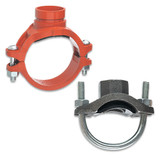
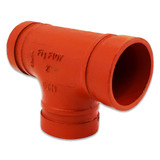
Grooved piping systems commonly use straight (equal) tees with identical openings and reducing tees with one branch of a different size. Mechanical tees provide another option for creating a branch connection without welding.
How do you read reducing tee sizes in pipe fittings?
Reducing tee sizes are expressed in an A × B × C format, where A and B are the two inline run sizes, and C is the branch size at a right angle. Understanding this notation ensures you select the correct tee for your application.