4.8 / 5
Customer
Satisfaction







Water flow testing equipment is critical for verifying the performance of water infrastructure and fire protection systems. Whether you’re testing a hydrant or a pump, accurate flow and pressure readings can ensure performance and confirm that the water supply can deliver the required flow and pressure during an emergency.
At QRFS, we supply professional-grade water flow testing equipment built for reliability, accuracy, and field performance. From brass pitot gauges to water diffusers and complete flow test kits, our products help fire protection professionals measure water flow and pressure with confidence.
Fire hydrant flow test equipment is essential for evaluating the performance of a municipal water distribution system. During discharge testing, technicians measure PSI and calculate flow rates to determine whether the hydrant can support fire protection demands.
Our selection includes durable pitot gauges, hydrant diffusers, valves, and accessories designed for dependable field use. Built with rugged brass components and engineered for reliable readings, these tools allow you to capture accurate pressure data without compromising safety or efficiency.
Hydrant flow testing helps verify:
Testing fire pumps and integrated fire protection systems requires precise water testing equipment capable of handling high pressure and continuous discharge. Our water flow test equipment supports performance verification for pump acceptance tests and regular system evaluations.
These flow test products help you measure water flow, confirm system reliability, and validate performance under real-world conditions. Accurate readings ensure a system meets regulatory standards and can deliver the required PSI during peak demand.
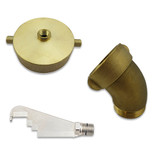
Water flow testing tools go beyond pitot tubes and gauges alone. Proper valves, diffusers, adapters, elbows, and other equipment make testing more efficient while preserving accuracy. Our water flow testing tools are designed to:
When accuracy, performance, and reliability matter, trust QRFS to provide the water flow testing equipment that professionals depend on every day. Shop online with fast shipping and expert support. Need additional testing equipment? Check out our selection of:
You can also visit the QRFS home page to see our full inventory of fire protection items.
Why is fire hydrant flow testing important?
Fire hydrant flow testing measures real-world water pressure and flow to ensure that hydrants can meet firefighting demands and that municipal water pressure meets essential requirements. Regular testing helps uncover closed valves or blockages and verifies performance to protect life and property.
How often should fire hydrants be flow tested according to NFPA?
NFPA 291 recommends that public fire hydrants be flow-tested every 5 years to verify their capacity and performance. This schedule helps account for changes in water system conditions that could affect firefighting capability.
What does a pitot gauge measure during a hydrant flow test?
A pitot gauge measures the velocity pressure (PSI) of water flowing from a hydrant or other outlet. That pressure reading is used to calculate the actual gallons per minute (GPM) discharge during testing.
What are the basic steps for using a pitot gauge for flow testing a hydrant?
To use a pitot gauge, first secure the proper nozzle on the outlet, then hold the gauge’s tube directly in the center of the water stream once the hydrant is flowing. Record the PSI reading, which will later be converted to GPM.
What’s included in a pitot gauge kit, and why is it useful?
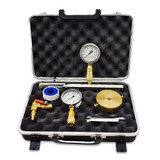
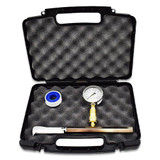
A pitot gauge kit typically includes, at a minimum, a gauge, pitot blade, a handle, PTFE thread-seal tape, and a protective case to support field testing. These kits streamline setup and ensure technicians have the correct tools for accurate hydrant or hose flow measurement. Larger flow test kits can include additional pitot blades, a quick-disconnect bleeder valve, additional gauges, test caps, elbows, and other parts that streamline testing across a range of scenarios.
How do you convert pitot gauge PSI readings to GPM?
To convert PSI to GPM, you use a mathematical formula that incorporates the pitot reading, the hydrant outlet diameter, and a coefficient of discharge. This calculation translates pressure into an actual flow rate measurement. Read this blog for an in-depth guide to converting these numbers.
What factors influence PSI-to-GPM conversion accuracy?
Accurate PSI-to-GPM conversion depends on correctly measuring the outlet diameter and using the right discharge coefficient for the hydrant or nozzle shape. Errors in these measurements can lead to incorrect flow rate results.