4.8 / 5
Customer
Satisfaction







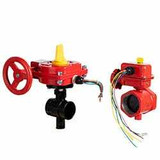
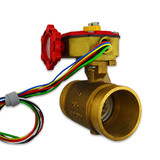
Control valves are critical to the design and function of fire protection systems. These valves regulate water flow to an entire system and can isolate sections during service. At QRFS, we stock high-performance, industry-trusted control valves for fire sprinkler systems, including butterfly, OS&Y, Powerball, and other types. Many of our control valves come with integrated tamper switches, which lengthen inspection intervals and verify that valves stay open, helping ensure a system will protect lives and property when every second counts.
Whether you’re planning a new system installation or replacing components, selecting the right valve is essential for maintaining system integrity. All of our control valve options are “indicating,” UL Listed, and FM Approved, meeting the demanding standards of the fire protection industry.
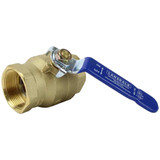
QRFS carries fire protection control valves with durable manufacturing quality and dependable shutoff control. Choose from common sizes and connection styles, including grooved, wafer, and threaded connections, to match your system requirements.
Our fire protection valves are designed to deliver consistent performance and meet strict technical standards. You’ll find trusted options for isolation, testing, and long-term reliability—ideal for installation pros and maintenance teams who need performance they can count on.
QRFS carries a variety of standpipe and fire sprinkler system valves and components to complete your system and streamline sourcing. We offer popular choices like butterfly valves, OS&Y valves, and powerball valves, plus compatible tools to help keep installations efficient and inspections smooth.
If you need help selecting the right valve for your project, our customer service experts are here to assist—fast.
Looking for a different fire protection part?
What is a control valve in a standpipe or fire sprinkler system?
A control valve is used to permit, restrict, or stop water flow in a fire sprinkler or standpipe system, often to isolate a section for service or emergency control. Because a closed control valve prevents a system from receiving water, these components are critical and must be inspected, monitored, and maintained to ensure they remain open when the system is in service.
What are the most common types of fire sprinkler control valves?
In fire protection, the most common control valve types include butterfly valves and OS&Y (outside screw/stem & yoke) valves. Both are used to open or shut off the water supply to a system or a portion of it, but they differ in design, footprint, and how they indicate open/closed status.
Why are butterfly valves commonly used as control valves?
Butterfly valves are popular control valves because they provide reliable flow control in a compact, lightweight package, sometimes at a lower cost than bulkier gate valves. In fire sprinkler and standpipe applications, they’re widely used to control water flow to system piping.
What does “OS&Y” mean, and why are OS&Y valves used as control valves?
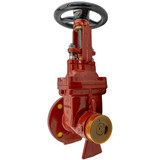
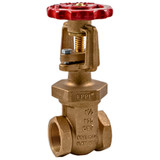
OS&Y stands for outside screw & yoke (or outside stem and yoke), a gate-valve design in which the stem visibly rises when the valve opens, providing a clear external indication of position. OS&Y valves are used as control valves because they’re easy to verify as open or closed, cause less pressure loss and friction when open, and are commonly specified in fire sprinkler and standpipe systems.
What’s the difference between wafer butterfly valves and grooved butterfly valves?
The difference is how they connect to the piping: wafer valves fit between flanges or special adapter rings, while grooved butterfly valves connect using grooved ends and couplings. Wafer connections are often slightly more economical, while grooved connections can be faster to install and simplify disassembly for service.
Why does NFPA emphasize supervision for sprinkler control valves?
Industry research shows that closed control valves are a leading cause of sprinkler system failure, which is why NFPA standards emphasize securing and/or supervising valves to keep them in the normal open position. Many systems use electrical supervision through a tamper switch that is networked to a fire alarm control panel— sending a signal if a control valve opens. Thus, many control valves, including QRFS’s butterfly valves, come with integrated tamper switches.
What should I do if a control valve is stuck, corroded, or has a broken handle?
A damaged or inoperable control valve is a serious impairment risk because it can prevent the system from being turned on or off. Contact a qualified sprinkler inspection, testing, and maintenance professional and replace/repair the valve ASAP to restore reliable operation.