4.8 / 5
Customer
Satisfaction






Quality fire hydrant and fire hose equipment is critical for protecting property and supporting effective firefighting operations. At Quick Response Fire Supply, we stock heavy-duty items designed to operate under extreme pressure, deliver consistent water flow, and meet the exact specifications required by today’s fire departments, standpipe systems, and other applications.
Our fire hose and hydrant components are engineered to connect securely to common thread types, including NPT, NPSH, and NH/NST connections, ensuring compatibility with trucks, standpipe systems, and municipal water supply infrastructure. Every device we offer is designed and rated for performance, durability, and emergency service use, helping ensure consistent performance when seconds matter most.
Fire hose assemblies must withstand high PSI, a variety of conditions, and repeated deployment. QRFS supplies fire hoses and fire hose nozzles, valves, adapters, reducers, valve caps, and storage solutions that handle various operations.
Each hose or component is designed to maintain optimal pressure, support consistent water flow, and connect cleanly to applicable pipe systems. Whether your application involves structural firefighting, property protection, or additional hose applications, our in-stock fire hose equipment is engineered to perform when needed most.
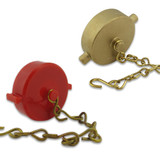
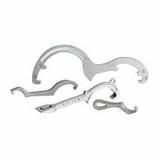
QRFS provides quality fire hose, hydrant wrenches, caps, covers, adapters, and tools designed for fast access and dependable operation during emergencies. Our hose and hydrant equipment supports the sizes and connection standards used in various jurisdictions and is built to withstand environmental exposure and repeated use.
Standpipes, hoses, and fire hydrants serve as critical water supply and delivery points in emergency response, and the correct equipment ensures firefighters or other trained personnel can deliver water efficiently and protect people and property.
Need something else? Check out our:
For additional fire protection solutions, visit the QRFS home page.
What are fire hose reels and racks in standpipe and hose systems?
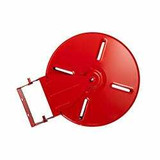
They are storage and deployment systems that hold onsite fire hose in standpipe systems, allowing quick access in emergency situations. Hose reels or racks are typically found in Class II or Class III standpipe systems, where onsite hoses may be present and trained onsite personnel might perform initial firefighting. However, current codes and regulations increasingly allow omitting onsite hoses in these standpipe systems when automatic sprinkler systems are present, and firefighters’ hose connections suffice.
Why do fire hose adapters and fittings matter in firefighting operations?
Fire hose adapters and fittings are essential because they allow hoses from different departments or other equipment with mismatched threads to connect securely. Without the proper adapters, hoses can’t join to other equipment, making these devices critical for interoperability and efficient operations.
What are the most common thread types used on fire hose adapters and fittings?
Common thread standards include National Standard Thread (NST/NH), National Pipe Straight Hose (NPSH), and National Pipe Thread (NPT), each with distinct sizing and connection rules. Mixing thread types without proper adapters can lead to failed and unsafe connections.
How do fire hose spray nozzles differ, and how should I choose one?
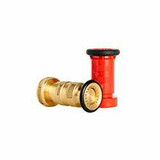
Fire hose spray nozzles vary by the spray pattern they produce (straight stream or fog), the pressure they handle, and their gallon-per-minute (GPM) discharge capabilities. Different nozzles suit different tasks: straight streams offer reach and penetration, while fog patterns help heat absorption and ventilation. NFPA standards like NFPA 1964 define how nozzles must perform under varying conditions.
What factors influence which spray nozzle I should use?
Key factors include the fire scenario, available water pressure, desired range, and whether cooling or penetration is the priority. Adjustable or automatic nozzles help maintain consistent pressure and flow across patterns, enhancing versatility in dynamic conditions. Simpler, smooth-bore nozzles may resist clogging better in some environments.
How do different double-jacket fire hose sizes compare?
Double-jacket fire hoses come in sizes like 1-1/2-inch, 1-3/4-inch, 2-inch, and 2-1/2-inch, each balancing weight, handling, and water flow. Smaller hoses are lighter and easier to maneuver but deliver lower volumes, while larger hoses flow more water but require more strength to handle. The choice depends on the firefighting scenario.
What’s the main difference between single-jacket, double-jacket, and rubber-coated fire hoses?
Single-jacket hoses have one polyester jacket over the inner rubber liner and offer a balance of pressure-handling and flexibility for moderately challenging applications. Double-jacket hoses feature a second woven jacket for extra durability and a higher pressure tolerance, making them suited for more demanding fire attacks. Rubber-coated hoses are typically used as supply or utility lines, are resistant to chemicals, and easier to clean, but don’t handle pressures as high as those handled by jacketed hoses.
When should I choose a double-jacket fire hose over a single-jacket hose?
Firefighters choose a double-jacket hose when they need higher abrasion resistance and the ability to withstand higher operating pressures, such as in aggressive attack or prolonged use scenarios. The extra jacket provides enhanced protection and a longer service life in rugged environments. For lighter-duty or occasional use, a single jacket hose might be sufficient and is easier to handle.