4.8 / 5
Customer
Satisfaction






Whether you’re installing or maintaining a water-based fire protection system, the right pipe and fittings are critical components that must function reliably to protect property and save lives. That’s why QRFS provides pipe and fittings backed by proven manufacturers and performance standards for professionals who need durable, code-compliant products.
We stock a wide range of options to fit your application—everything from ductile iron and CPVC to grooved, threaded, and wafer connections, as well as couplings, hangers, fasteners, and specialty tools. Our product selection supports requirements from the National Fire Protection Association, including NFPA 13, and helps you meet jobsite expectations for long-term system reliability and maintainability.
Choosing the right fire sprinkler pipe material and fitting material starts with the system design, the building’s hazard classification, and the environment where the pipe will be installed. QRFS offers popular industry options, including CPVC for residential and light-hazard applications, as well as ductile iron, black steel, and brass fittings. Many parts also integrate with standpipe designs, depending on the fire protection system design needs.
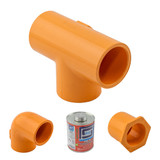
From couplings to reducers and elbows, fire sprinkler pipe fittings ensure secure connections and reliable water flow. Various options are UL Listed, FM Approved, and manufactured to meet stringent material standards—giving you confidence on every install and maintenance job. If you’re planning a CPVC system, we carry high-quality brands, including Spears FlameGuard® and BlazeMaster® parts.
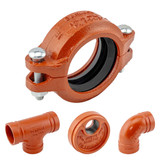
Efficient installs often come down to connection type. QRFS supports common joining methods, including grooved, threaded, and CPVC solvent-cement connections. Grooved systems, in particular, are known for installation speed and adaptability—ideal for many commercial systems and reducing downtime during maintenance work.
QRFS aims to be your trusted fire equipment supply source, including and beyond providing the pipes and fittings needed for fire suppression systems. That’s why we also carry pipe-cutting tools, hangers, clamps, and fastening solutions that help you properly install, adapt, or support the system while maintaining code compliance.
Do you need additional fire protection parts? Shop related categories like fire sprinklers and accessories, FDCs and accessories, and testing and monitoring equipment—or return to the QRFS home page to view the full catalog.
What are the most common fire sprinkler pipe materials?
The most common sprinkler pipe materials include steel, CPVC, copper, and PEX, with usage varying by application, preferences, cost, and code allowances. Steel remains the most common material in commercial systems, while CPVC and PEX are frequently used in residential and light hazard settings due to easier handling and more efficient installations.
Why do many residential and light hazard sprinkler systems use CPVC instead of metal?
CPVC is lightweight, corrosion-resistant, cost-effective, and easier to install, helping reduce labor hours when installing fire sprinkler systems in residential and light-hazard occupancies. In particular, the material is easier to cut, transport, join, and adapt in the field.
How should CPVC pipe and fittings be stored and handled before installation?
CPVC should be stored in a way that prevents scratches, cracks, and UV exposure, since physical damage and prolonged sunlight can weaken the pipe. Many manufacturers recommend keeping the pipe and fittings in their packaging until ready to install and inspecting the materials for damage before use.
What is “chemical incompatibility” with CPVC, and why does it matter?
Chemical incompatibility occurs when certain substances (such as lubricants, sealants, or firestopping products) react with CPVC, leading to cracking or failure over time. That’s why manufacturers stress the use of only approved products and the strict adherence to published compatibility guidelines.
What does SDR mean in CPVC sprinkler pipe sizing?
SDR stands for Standard Dimension Ratio and refers to the ratio between a pipe’s outside diameter and its wall thickness. This CPVC fire sprinkler pipe size is typically specified by SDR rather than Schedule numbers.
What are the main types of sprinkler pipe fittings?
Common fittings include couplings, elbows, tees, reducers, caps, and mechanical tees, each designed for specific flow changes or branching needs.
Why are grooved couplings considered one of the fastest connection methods?
Grooved couplings connect pipes using a gasket and clamp housing rather than threaded joints, welding, or flanges. This reduces labor time, eliminates hot work, and makes future maintenance or system changes much easier.
What’s the difference between rigid and flexible grooved couplings?
Rigid couplings are designed to strictly limit pipe movement and help maintain alignment, while flexible couplings allow controlled deflection and movement. Flexible options can help accommodate thermal expansion, vibration, or slight misalignment in the piping system, and they are particularly relevant in earthquake-prone areas that require seismic design.
What are pipe hangers and fasteners used for in sprinkler systems?
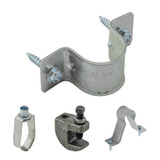
Fasteners and hangers support pipes so they stay secure, level, and properly spaced according to system design requirements. A well-supported system limits stress on joints and prevents sagging or movement due to the weight of water-filled pipes.
What are the most common types of sprinkler system fasteners?
Common fasteners include threaded rod anchors, beam clamps, and specialized anchors designed for steel, wood, or concrete structural members. The best choice depends on the substrate and the load requirements of the piping system.
What’s the difference between malleable iron, ductile iron, and cast-iron fittings?
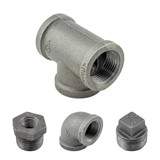
These fittings differ in strength, flexibility, and manufacturing processes, which impact how they perform under pressure and stress. However, all three iron materials that are properly manufactured and meet NFPA and/or American Society of Mechanical Engineers (ASME) requirements are good options designed to meet specific pressure/size rules. That said, malleable and ductile iron are often viewed as more modern, high-performance alternatives to cast iron, which is generally the most brittle option. You can read more about iron fitting materials in this blog.