4.8 / 5
Customer
Satisfaction







Fire protection valves are essential components that regulate water flow, pressure, and system activation within standpipes, fire sprinkler systems, and other water-based fire protection systems. At QRFS, we supply high-quality, dependable valves designed to support the safety and performance of your entire fire protection system. These devices play a critical role in managing pressure reduction, water control, water direction, water access, and other key functions.
QRFS’s standpipe and fire sprinkler system valves provide dependable performance and long-lasting durability. These finely engineered fire protection products help safeguard lives and property by ensuring a system activates and operates correctly during an emergency.
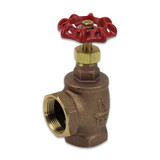
Our selection includes butterfly valves, gate valves, hose valves, check valves, alarm check valves, angle valves, and other specialized valves engineered for use in demanding fire protection industry environments. Various products support proper water flow, pressure, connection integrity, and system responsiveness—ensuring fire sprinklers, hose lines, and other components operate when needed. Whether you’re replacing a system part or completing a new installation, a wide variety of valves are available to match your requirements.
In addition to offering quality fire protection valves, QRFS provides expert support, fast delivery, and the trusted brands professionals rely on. If you need something that’s not in our online inventory, just contact us.
You can also explore related system components such as:
Or return to the QRFS home page to see more equipment.
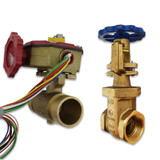
A control valve is a valve that regulates or shuts off water flow to the system or a portion of it. Without a properly functioning control valve, the water supply could be cut off—disabling the system—or stuck in the on position, which can be a problem in the case of a pipe leak or activated sprinkler. Control valves are typically either butterfly valves or outside stem and yoke (OS&Y) valves, each named for the mechanism of how they open and close. All fire protection control valves must be “listed,” meaning they have been tested and certified to work in these applications, and “indicating,” meaning they can tell observers at a glance whether they are open or closed.
A butterfly valve has a rotating disc inside the valve body. When the disc is parallel to the flow, it allows water through; when rotated 90 degrees, it stops water flow. A stem (connected to a handwheel) rotates the disc, and a position indicator shows if the valve is open or closed. They have become popular because they are lighter, more compact, and easier to install than older gate-type valves.
Each is compatible with a specific type of pipe joining found in a specific system.
An OS&Y (outside screw/stem & yoke) valve is a gate-type control valve. Instead of a rotating disc, it uses a gate that rises or lowers perpendicularly to the water flow. When the gate is lowered, it seals against valve seat to stop flow; when raised, water flows freely. The external stem/yoke gives a clear visual indication of open or closed status.
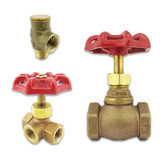
Yes! Various “trim valves” (like three-way valves, pressure-relief valves, in-line or swing check valves) perform various crucial functions in fire protection, supporting inspection, testing, drainage, pressure relief, water direction, and more in fire sprinkler and standpipe systems. They help ensure safe, controllable maintenance and compliance.
A three-way valve has one inlet and two outlets — enabling flow to be diverted between two paths. Commonly used during testing or maintenance to redirect water (e.g., divert flow to a pressure gauge or test drain) without shutting off the entire system.
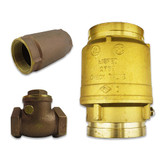
A check valve allows water to flow only in one direction—into the system—while preventing backflow into the supply. This can protect the public water system from contamination and help maintain system pressure. Check valves can also minimize water hammer and support more stable system operation.
A shotgun riser check valve is an inline check valve installed in a sprinkler riser. Its slim, tubular design reduces friction loss and makes installation easier in tight riser spaces compared to traditional swing checks. It also reduces clapper chatter, making it a preferred choice in many modern systems.