4.8 / 5
Customer
Satisfaction







Proper testing and monitoring are crucial for maintaining the reliability of fire protection systems, firefighting tools, and other vital equipment, as well as for compliance with relevant codes and standards. At QRFS, we supply a full range of fire protection testing and monitoring equipment to support contractors, facility managers, and fire protection professionals.
From taking water flow measurements to smoke alarm testing and electronic supervision, our products help users perform accurate tests and consistently assess the status of systems.
We carry trusted brands and durable tools specifically designed for use in a range of applications.
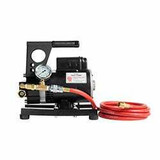
Our selection of standpipe and fire sprinkler test equipment includes a range of hydrostatic test pumps that enable new system acceptance tests and regular assessments of existing systems, including 5-year hydrostatic tests of the pipe from the fire department connection (FDC) to the check valve.
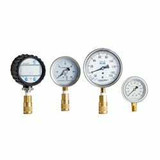
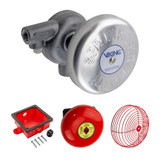
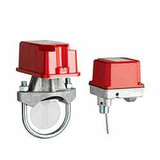
Supervision equipment includes reliable and accurate gauges, local alarm bells, tamper switches for control valves, and both paddle-type flow switches and pressure switches that detect system activations.
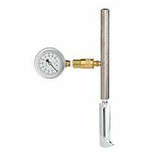
Routine fire hydrant testing and other flow testing are essential to confirm that fire protection equipment and water supplies operate within design specifications. QRFS offers flow test kits, water diffusers, and flow testing parts, including pitot tubes, gauges, and more, that make the process straightforward and dependable.
Our tools help ensure that equipment delivers the required water flow and pressure during an emergency. Whether you’re conducting hydrant flow testing, verifying water pressure, or performing fire hose evaluations, our products provide accurate results.
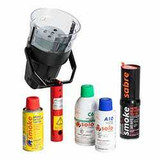
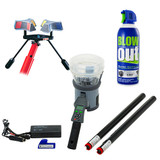
Testing doesn’t stop at water-based fire protection systems. QRFS offers devices designed for smoke detector testing, CO detector testing, and heat detector testing. Our inventory includes popular tools like smoke in a can, CO in a can, and various kits for functional detector checks.
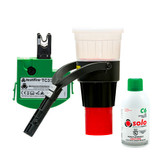
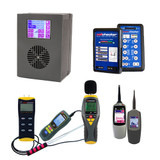
We also provide specialized tools that enable battery testing, duct detector testing, and sound and voice testing of alarms and public address systems. Our equipment is trusted by installers, property maintenance teams, and fire protection industry professionals nationwide.
What is a hydrostatic test pump, and why is it used?
A hydrostatic test pump pressurizes the water in fire sprinkler, standpipe, plumbing, and other water-based systems to verify there are no leaks or weak fittings, ensuring system integrity. In fire protection, these tests are conducted at system acceptance, after major sprinkler system revisions (affecting 20 or more sprinklers), and at five-year intervals for certain standpipe systems or sections of pipe in systems with fire department connections.
What features should I consider when selecting a hydrostatic test pump?
Key features include maximum pressure (PSI), flow rate (GPM), weight/portability, power source, hose length, hose connection, pressure maintenance method, and gauge type. In particular, higher PSI allows testing at greater pressures required for larger systems, while higher GPM fills and pressurizes systems faster.
What is a pitot gauge kit used for?
A pitot and gauge measure water pressure and a calculated flow, including from fire hose nozzles or hydrants. Complete pitot gauge kits include pitot blades, gauges, and accessories, such as hose adapters, hydrant flow nozzles, PTFE tape, and more, making flow testing more efficient and effective.
How does a fire alarm bell or water motor gong work in a fire sprinkler system?
Fire alarm bells and water motor gongs activate when water flows through a sprinkler (or just the pipe network), signaling a system activation or leak and alerting occupants and first responders. Electric bells activate via an electrical signal from a switch, while water motor gongs use the force of flowing water to sound the alarm without a separate power source.
Where are fire alarm bells typically installed on a riser?
They are usually mounted outdoors near the system riser so they are audible to occupants and firefighters, though placement may vary by locally applicable rules and system design.
What is a tamper switch in a fire protection system?
A tamper switch detects unauthorized changes to valves (like control valves) that should remain open for system readiness and sends a supervisory signal if tampered with.
What’s the difference between a flow switch and a pressure switch in fire systems?
Flow switches detect the actual movement of water (e.g., when a sprinkler opens), typically by pushing a vane/paddle, while pressure switches respond to changes in system pressure, such as a drop in pressure in a dry-pipe system when a sprinkler opens. Both can detect system activations and initiate alarms, but each responds to different triggers and is used in specific applications.